Guide · 1547 words · updated 2026-11-23
What the exchange-rate gap is and how to read it
The gap is the percentage difference between an "alternative" dollar — blue, parallel or crypto — and the official dollar. Think of it as a thermometer: the higher it is, the harder it is to get dollars the traditional way.
In this guide · 15 sections
- The definition, simply
- Which official rate we use
- An example with real numbers
- What a high gap tells you
- What a low or zero gap tells you
- The gap in different countries
- Buy gap and sell gap
- How to use the gap to decide
- Why USDT and the blue dollar don't always match
- How to read the gap's history
- Where to see the gap live
- Common misreadings of the gap
- A short history of gaps in the region
- Using the gap with the calculator
- Quick questions
The definition, simply
Imagine the official dollar is at 1,000 and USDT costs 1,150 on the P2P market. You pay 150 more per dollar. As a percentage of the official rate, that's 15%. That's the gap.
The formula is: gap = (alternative price − official price) ÷ official price × 100. It can be positive (the alternative dollar is more expensive, the usual case) or negative (it's cheaper, which sometimes happens briefly in markets with lots of USDT for sale).
Which official rate we use
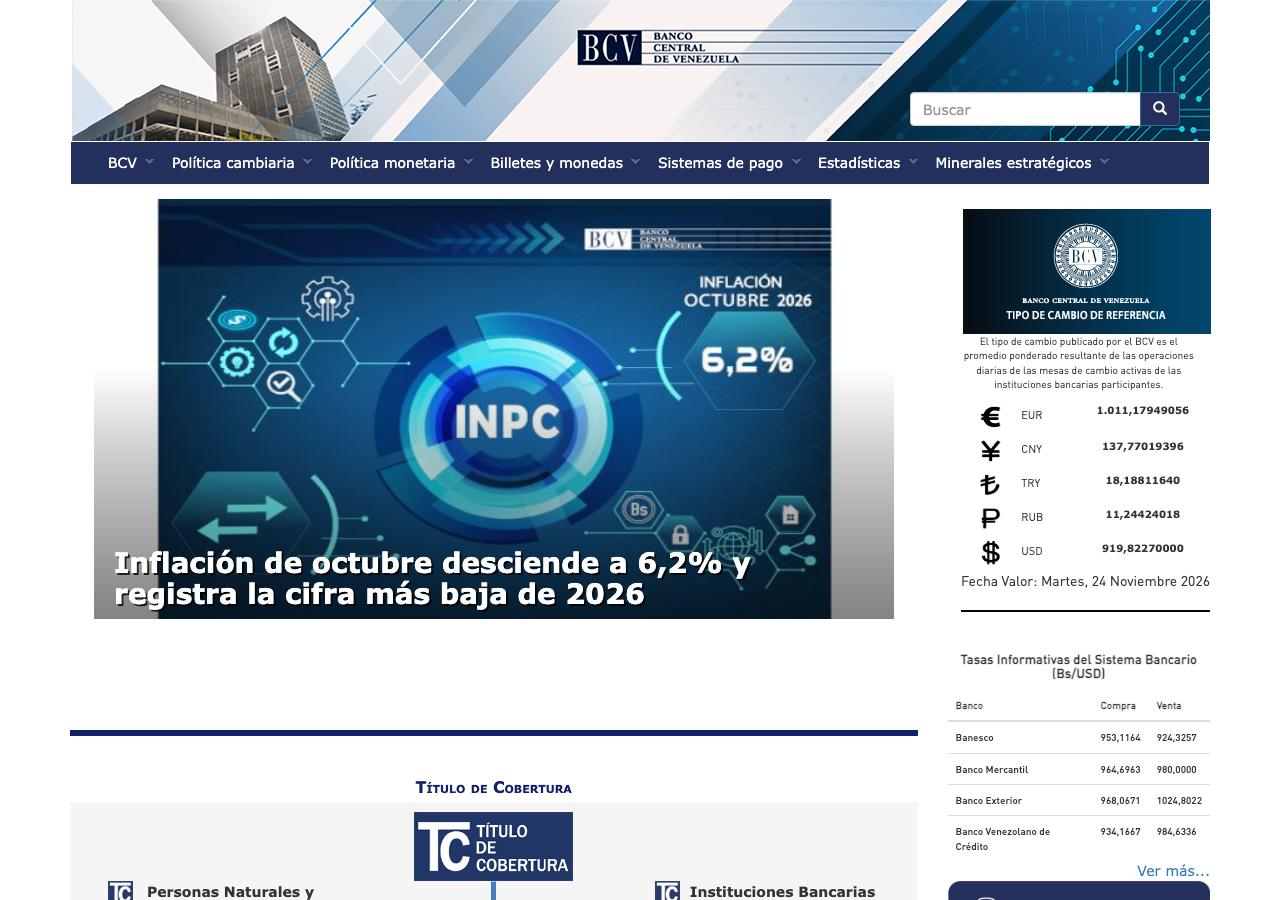
Each country publishes its official dollar differently, and it isn't always the rate people actually use. CoinCTC takes the country's own rate whenever available: the official rate in Argentina, the BCV dollar in Venezuela, Bolivia's official rate, the Bank of Mexico's FIX, Colombia's TRM and Chile's observed dollar. Where there's no local source, we use an international reference.
For the "alternative dollar" we use the best buy price of USDT among typical ads — the cheapest an ordinary buyer can actually pay at that moment. We don't use the single cheapest ad, because it's often for amounts almost nobody trades.
An example with real numbers
Take Argentina at the time of writing. The official selling rate was 1,600 pesos, the MEP about 1,743, and USDT cost about 1,771 on P2P. The USDT gap against the official rate was (1,771 − 1,600) ÷ 1,600 × 100 ≈ 10.7%. Against the MEP it was only (1,771 − 1,743) ÷ 1,743 × 100 ≈ 1.6%.
What does that say? USDT was well above the official rate but almost level with the MEP. For someone without access to the official rate, the useful comparison is with the MEP or the blue, and there the difference was small. That's why the Argentina page shows all the references, not just the official one.
In Venezuela at the same moment, the BCV published about 920 bolívares per dollar and USDT on P2P was around 1,090: a gap near 18%. In Mexico, USDT at 19.20 pesos against a FIX near 19 left a gap below 1%.
What a high gap tells you
A high gap almost always means getting dollars officially is restricted or slow: quotas, controls, paperwork, or banks simply short of dollars. People who need dollars — to save, travel, pay abroad or protect themselves from inflation — go to the alternative market, and that demand pushes the price up.
It can also reflect expectations: if the market thinks the official dollar will rise (a devaluation), the alternative dollar tends to move first. That's why economists watch the gap as a sign of currency stress.
What a low or zero gap tells you
If the gap is near zero, USDT works like any other dollar: it costs what it does at the bank, plus or minus the merchants' margin. That's usually the case in Mexico, Chile or Peru, where buying dollars is relatively easy. There, people use USDT more for convenience — sending money fast, saving in an app — than out of necessity.
A negative gap appears when many people want to sell USDT, for example those paid from abroad in crypto who need local currency. It rarely lasts: merchants take advantage of the difference and the price settles again.
The gap in different countries
- Argentina: several dollars coexist (official, blue, MEP, CCL, card and crypto). The gap between the official rate and the rest has been central to the economy for years.
- Venezuela: the BCV dollar is compared with the parallel rate and the "dólar Binance". The gap moves fast and people use it as a pricing reference.
- Bolivia: the shortage of cash dollars grew the P2P market, and the difference with the official rate became a daily topic.
- Colombia, Mexico, Peru, Chile and Central America: the gap is usually small; what matters more is the difference between exchanges, payment methods and merchants.

Buy gap and sell gap
Because P2P has two prices, there are two gaps. The one usually published is the buy gap: how much more you pay for one USDT than for an official dollar. If you hold USDT and want to sell, what matters is the sell gap: how much more (or less) you get than at the official rate.
The difference between the two is the market spread. With lots of competition it's small; in nervous moments it can widen. If you plan to buy today and sell in a few days, remember you pay the buy gap and collect the sell gap.
How to use the gap to decide
The gap doesn't tell you whether the dollar will rise or fall tomorrow. It tells you how much you're paying above the official rate today, and that helps you compare options:
- Compare with other routes. If your country has a cheaper legal way to buy dollars (such as the MEP in Argentina), the gap helps you see which fits your amount.
- Watch the trend. Each country's history page shows the gap day by day. A gap rising fast usually signals stress.
- Don't try to time the peak. Many wait "for it to drop" and end up buying higher. If you need dollars, buy what you need and compare the price well.
- Remember the spread. The gap uses the buy price; if you sell, you get somewhat less.
Why USDT and the blue dollar don't always match
Many people expect the crypto dollar to equal the blue or parallel rate, and they're often close, but they're different markets. The blue is cash changing hands informally; USDT is a digital dollar paid by transfer. Each has its own supply, demand and costs.
USDT can also be bought at any hour, while the blue has opening hours and the MEP depends on market days. So on weekends and holidays the crypto dollar often moves differently: it's the only market open.
How to read the gap's history
- Isolated spikes are usually reactions to news and tend to correct.
- Sustained rises over several days show real pressure on the dollar.
- Jumps in the official rate (a devaluation, say) shrink the gap at once even if USDT doesn't move.
- Weekends can show different moves because other markets are closed.
Where to see the gap live
CoinCTC has a live ranking of the gap across every country we follow, updated every 30 seconds, and each country page shows the official dollar next to the USDT price. In Argentina we also show the blue, MEP and CCL, and in Venezuela the parallel rate, with how much more or less USDT costs against each.
The gap is easy to understand and very useful to get your bearings. Use it as a compass, not a crystal ball, and combine it with what matters most: choosing well who you buy from.
Common misreadings of the gap
- "A high gap means USDT will fall." Not necessarily. The gap can stay high for months if restrictions stay in place.
- "A falling gap means the dollar is cheaper." It may fall because the official rate rose, while USDT costs the same or more.
- "The gap is the merchants' profit." Merchants earn the spread between buy and sell, which is usually much smaller than the gap.
- "Every source shows the same gap." Each one uses different prices and official references, so small differences are normal.
A short history of gaps in the region
Gaps appear wherever access to dollars is limited. Argentina has lived with several exchange rates for long stretches, and the difference between the official dollar and the blue reached very high levels in periods of strict controls. Venezuela went through years of controls in which the official rate and the street rate were far apart, which is one reason the "Binance dollar" became a daily reference there.
In countries with free exchange markets, such as Mexico, Chile, Peru or Colombia, the gap is usually tiny and short-lived. When it opens there, it's usually a sign of local demand for fast transfers — salaries paid in crypto, remittances — rather than currency controls. Watching how the gap behaves over time tells you which kind of market you're in.
Using the gap with the calculator
On each country page, the CoinCTC calculator converts your amount at the best live price and shows how much more or less you'd pay against the official rate. Enter the amount you actually plan to trade: with small amounts the gap is what you'd expect, but with large ones only some merchants accept your size, and the real gap can be slightly higher.
Quick questions
- Does a high gap mean USDT is expensive? It means it's expensive compared with the official rate. If the official rate isn't really available to you, compare with the routes you can actually use.
- Why does one site's gap differ from another's? Each uses different prices: some an average of ads, some the cheapest, some a single exchange. Check which price each source uses.
- Can the gap disappear? Yes. When restrictions are lifted or the dollar supply changes, the gap can shrink a lot quickly.